There is a common perception that better security means more friction:
• More passwords
• More authentication prompts
• More restrictions
• More processes for users to navigate
• More reasons why they can't simply get on with their job.
I don't believe it has to be that way. In fact, I think the best security should often be largely invisible to the user.
The technology should allow people to work productively while continuously enforcing the security controls around them. That's the opportunity created by modern Zero Trust, identity and digital workspace technologies.
Security and productivity shouldn't be competing priorities
People expect to be able to work from wherever they are. They need access to applications, files and collaboration tools.
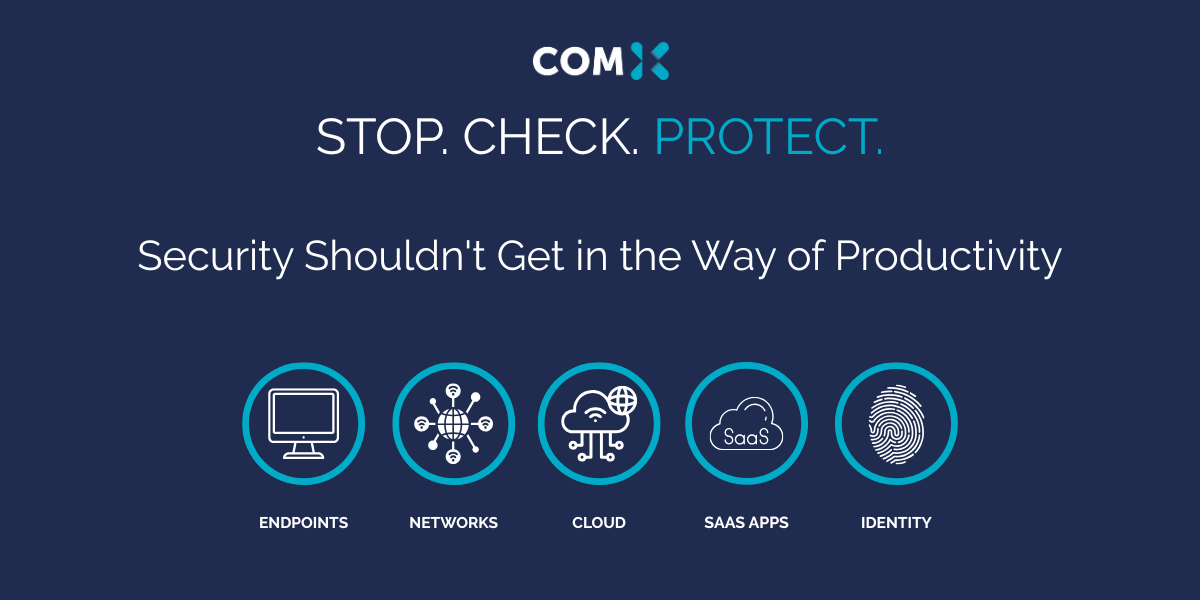
They work across Microsoft 365, Google Workspace, SaaS applications, cloud platforms and digital workspaces. Security needs to support that reality.
The answer isn't to lock everything down so tightly that people find ways around the controls. It's to build security into the experience.
A user shouldn't need to understand Zero Trust architecture. They shouldn't need to know how identity risk is calculated. They shouldn't need to understand endpoint telemetry or session tokens.
The technology should do the heavy lifting.
Security that adapts to the situation
Imagine two scenarios.
A user logs in from their usual device, from their usual location, accesses the applications they normally use and behaves consistently with their established pattern.
Why create unnecessary friction?
Now imagine the same account suddenly logs in from an unfamiliar location, using an unknown device, and begins accessing applications and data they don't normally use.
That's different.
The technology should be able to recognise that the context has changed and respond accordingly.
That might mean requiring additional verification. It might mean restricting access. It might mean triggering an alert. Or it might mean automatically taking action when multiple indicators suggest an account has been compromised.
This is the practical side of Zero Trust. Don't automatically trust. Continuously validate.
Make security proportional to risk
• Not every user needs the same level of access
• Not every application carries the same risk
• Not every activity requires the same level of scrutiny.
Security should reflect that.
• An executive accessing sensitive information from a managed device may require different controls from a contractor accessing a limited application.
• A finance employee making a payment should face appropriate verification around high-risk actions.
• A user exhibiting unusual behaviour should be subject to additional checks.
The technology should be sophisticated enough to apply security where it matters without creating unnecessary barriers everywhere else.
The best technology supports both sides
This is where Com-X brings together two areas that are often treated separately: digital experience and cybersecurity. We understand that technology has to work for the user. but it also has to work for the security team.
For the user, that means reliable access to the applications and data they need.
For the security team, it means visibility, auditability, identity controls, behavioural signals and the ability to respond when something changes.
The strongest environments do both.
Don't just buy more security
Most organisations already have significant investment in security technology.
The question isn't always: What else should we buy?
A better question can be: Are we getting everything we can from what we already have?
At Com-X, we look at the existing environment and identify where the gaps are.
• It could be configuration
• It could be identity
• It could be visibility
• It could be a lack of integration
• It could be alerts that aren't being acted upon.
Or it could be that security controls are creating unnecessary friction for users.
Our role is to understand the environment and build an approach that is appropriate to the organisation's risk, budget and way of working. That can include security assessments, vulnerability management, penetration testing, Zero Trust, secure identity, endpoint protection, security awareness, managed SOC capabilities and incident response.
The objective isn't to make security as sophisticated as possible. It's to make it as effective as your business needs it to be.
The real goal: secure productivity
Cybersecurity shouldn't be about putting up barriers around your people.
It's about giving them the tools to work productively while creating the controls, visibility and intelligence needed to protect the organisation. That's the balance.
Technology should help your people do their jobs, it should also continuously assess whether the person, device, application and activity can be trusted.
And when something doesn't look right, it should be able to step in.
Good security should be visible when it needs to be – and largely invisible when it doesn't.
Stop. Check. Protect. And keep validating.
This Scams Awareness Week, don't just ask your people whether they can spot a scam.
Ask a bigger question: If a sophisticated scam gets through, how confident are you that your technology will detect what happens next?
Because the real test of your security isn't whether someone ever clicks, it's what your organisation can see, validate and do after they do.
And the ultimate goal isn't to make people work around security.
It's to create an environment where security enables productivity.
Where Com-X can help
Com-X brings together cybersecurity and digital workspace expertise to help organisations build secure environments without compromising the experience their people need to get their jobs done.
We can assess your current technology, identify gaps between security controls and help you build a more resilient, security-first environment.