In today’s hybrid and distributed world, organisations invest heavily in platforms, infrastructure and security. Dashboards glow green. Systems appear healthy. Yet users still lose hours of productivity every day because something, somewhere, isn’t working the way it should.
At Com-X, we see this pattern repeatedly. Too often, businesses are told everything is fine because a report says so — while the reality on the ground tells a very different story. This gap between perceived health and real-world experience is where productivity is lost, costs escalate, and confidence erodes.
This disconnect between what IT sees and what users experience is exactly what 2Steps was created to solve.
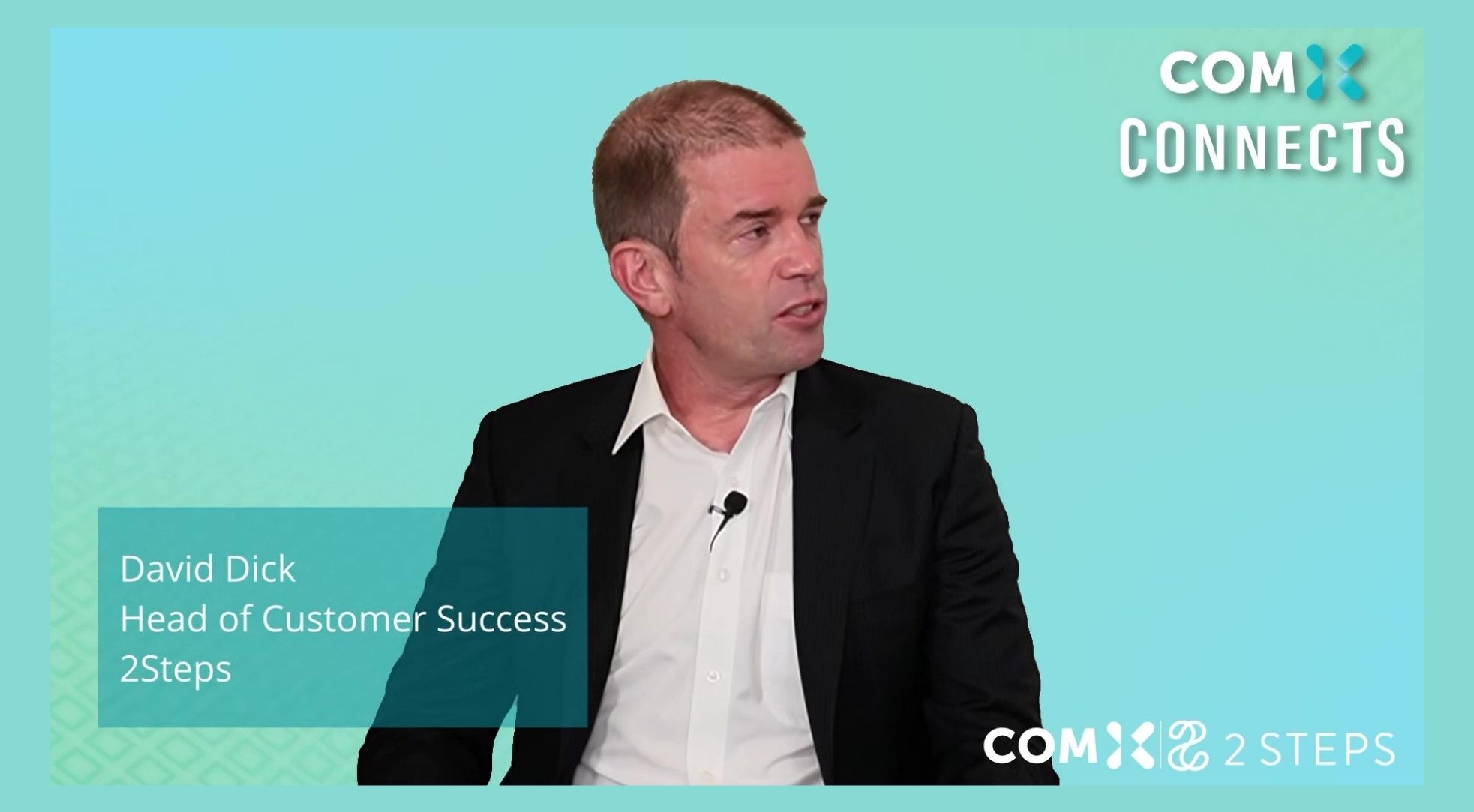
In a recent Com-X Connects interview, Nick Cross, Director of Sales and Marketing at Com-X, sat down with David Dick, Head of Customer Success at 2Steps, to explore how organisations can finally answer one deceptively simple, but business-critical question: can my users actually get their work done?
Why traditional monitoring falls short
Most monitoring tools are built to look inward. They track CPU, disk, memory, databases or specific applications in isolation. While valuable, these tools rarely reflect the outcome the business actually cares about — whether people can do their jobs.
When users report “the system is down” or “I can’t log in,” IT teams are often forced into war-room mode. Each team checks their own dashboards. Everything looks fine. Meanwhile, productivity stalls, revenue is impacted, and trust in IT suffers.
As David explains, the real issue is that no one is monitoring the entire user journey end-to-end. Not just whether a component is running, but whether a real person can authenticate, launch an application, complete a workflow, and move on with their day.
From a Com-X perspective, this is where many traditional security and operations approaches fall short. Reports, point-in-time assessments and static compliance views don’t validate outcomes. They describe what should be happening, not what is actually happening.
Virtual users that mirror real work
2Steps approaches monitoring differently. Instead of instrumenting every system component, 2Steps deploys ‘virtual users’ that continuously perform the same actions a human would — logging in, launching applications, navigating processes, submitting transactions and logging out again.
These synthetic users run on a schedule, from multiple locations, and record exactly what they see on screen. If something fails, teams don’t just get an alert — they get visual evidence of where and how the experience broke.
For Com-X customers, this means faster root-cause analysis, fewer internal debates, and dramatically reduced mean time to resolution. More importantly, it reduces complexity and cost by focusing effort only where there is proven impact.
Detecting the unknown unknowns
One of the biggest challenges in modern IT and security operations is the ‘unknown unknown’ — issues no one thought to monitor. Expired certificates, failed integrations, broken authentication flows or SaaS outages often sit undetected until users are already affected.
Because 2Steps validates real workflows, it exposes these failures early, before service desks are flooded and before issues escalate into business incidents.
Whether it’s a hospital accessing an EMR system, a retailer processing payments or a bank transferring funds between accounts, organisations gain early warning, proof of impact, and clarity on priority.
This aligns strongly with Com-X’s philosophy: helping customers validate problems early, reduce unnecessary noise, and focus investment where it delivers the greatest outcome.
From reactive firefighting to proactive confidence
With continuous validation of critical business processes, organisations move from reacting to incidents to preventing them. Leaders gain confidence that systems are working — not because a vendor report says so, but because independent evidence proves it.
When changes are introduced — patches, upgrades, security controls or cloud migrations — 2Steps provides an immediate, objective way to measure whether those changes improved or degraded the user experience.
For executives, this shifts conversations from opinion and assumption to evidence and outcomes.
Why Com-X and 2Steps together
Technology alone is never the answer. Outcomes come from applying technology with intent.
Com-X works with customers to identify what truly matters — the workflows that underpin revenue, patient care, customer experience and workforce productivity. From there, we help design and deploy 2Steps in a way that validates those outcomes continuously.
Sometimes, that means challenging traditional approaches. Sometimes, it means not relying solely on the standard reports many security or operations teams are accustomed to. Instead, Com-X dares to think differently — asking “What is the best outcome for the customer?” and “How can we prove it is being achieved?”
Together, Com-X and 2Steps help organisations reduce complexity, lower the cost of problem resolution, protect productivity and build resilient digital environments with confidence.
Watch the full interview or listen to the podcast to discover how virtual users, end-to-end workflow validation and proactive visibility can transform the way you manage digital experience.
About Com-X
Com-X is Australia’s leading Digital Workspace and Cyber Security specialist, helping organisations design, secure and optimise modern work environments. With deep expertise across EUC, networking, cloud and security, Com-X partners with customers to improve user experience, strengthen resilience and maximise technology investments.
About 2Steps
2Steps is a digital experience monitoring platform that validates real user workflows end-to-end using virtual users. By showing what users actually see, 2Steps helps organisations detect issues early, pinpoint root cause and ensure critical business processes always work as expected.